
Could States Force People With Disabilities Into Institutions? Understanding the Law, the Fear, and What’s Really at Stake

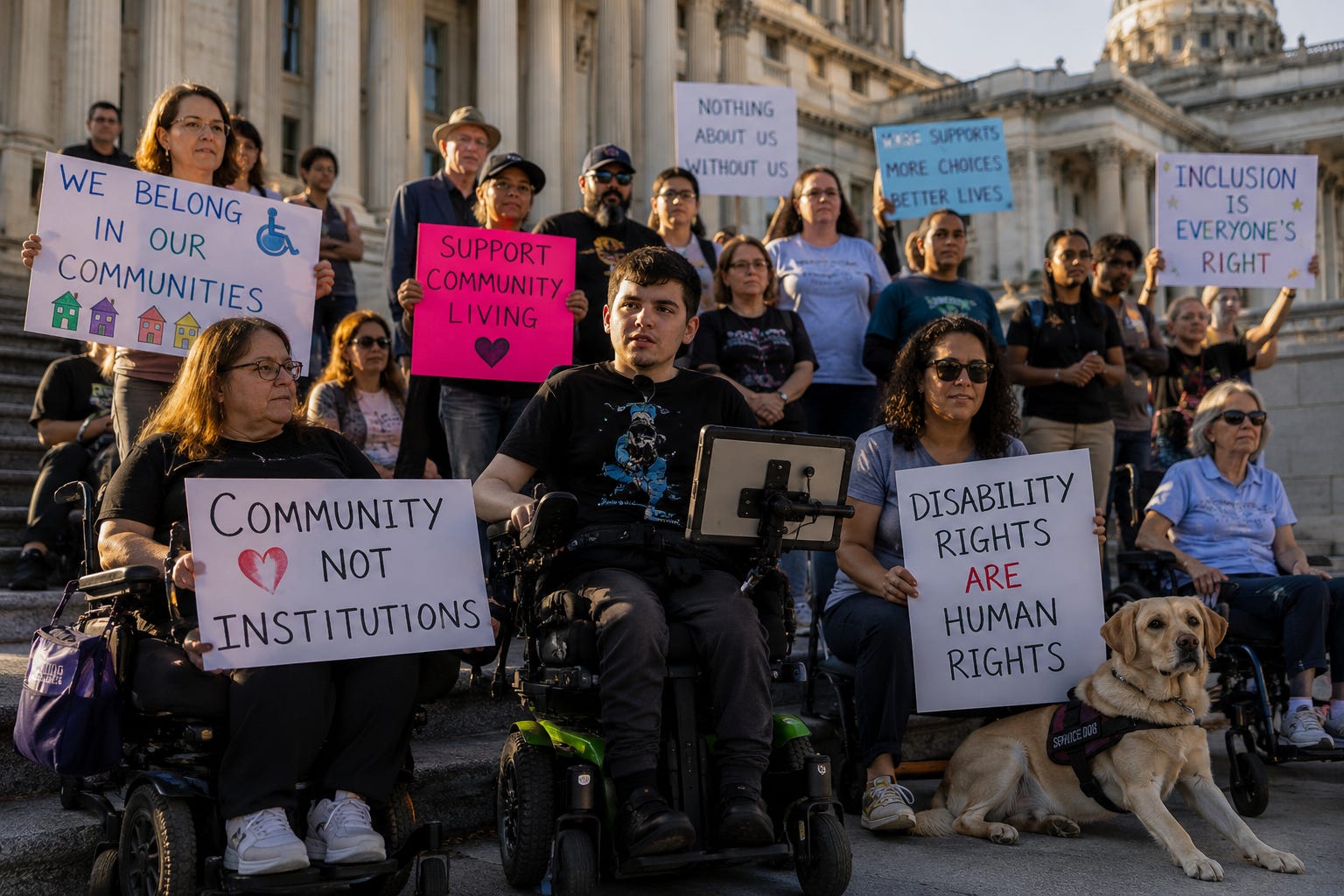
For decades, the disability rights movement has worked toward a single goal: ensuring people with disabilities have the opportunity to live, work and participate in their communities rather than in large institutions.
Today, a growing number of parents, self-advocates and disability organizations are asking whether that progress could one day be reversed.
Across social media and advocacy groups, concerns have intensified amid debates over Medicaid funding, state budgets and long-term care services. Some families fear that reductions in community-based supports could leave states with fewer options for individuals with significant disabilities, raising questions about whether institutional care could once again become more common.
The anxiety is understandable.
For many families raising children with autism, intellectual disabilities or complex medical needs, community supports are not simply conveniences. They include home health aides, occupational therapy, speech-language services, respite care, supported employment, transportation and residential assistance. Together, those services often make independent or family-based living possible.
As policymakers debate the future of Medicaid and disability services, many families worry about what could happen if those supports were reduced.
But legal experts say it is important to separate fear from current law.
Under existing federal law, states cannot simply place a person with a disability into an institution because they have a disability. Individuals retain constitutional due process rights, and numerous federal protections limit when and how institutional placements can occur.
One of the strongest legal safeguards is the Americans with Disabilities Act.
In 1999, the U.S. Supreme Court issued its landmark decision in Olmstead v. L.C., holding that unnecessary institutionalization of people with disabilities constitutes discrimination under the ADA. The Court concluded that public entities generally must provide services in the most integrated setting appropriate to an individual’s needs when community placement is appropriate, the individual does not oppose it and the placement can be reasonably accommodated.
The decision fundamentally changed disability policy in the United States.
Rather than assuming institutional care was the default option, states were encouraged to expand community-based services that allow people with disabilities to live in homes, apartments and neighborhoods alongside everyone else.
The result has been a decades-long shift away from large state institutions.
Many Americans, however, remember what those institutions once represented.
Throughout much of the 20th century, thousands of children and adults with developmental disabilities lived in large residential facilities, often isolated from their families and communities. Investigations documented overcrowding, inadequate medical care, neglect and abuse in some facilities. Those findings helped fuel the disability rights movement and led many states to close institutions in favor of community-based supports.
That history remains deeply personal for many families.
Parents who spent decades advocating for inclusive education, supported employment and independent living often view any discussion of reducing community services through the lens of that experience. Even if institutionalization is not the stated goal of proposed policy changes, they worry that fewer services could leave families with limited alternatives.
Disability advocates frequently describe the issue as one of practical choice rather than legal authority.
If waiver programs develop years-long waiting lists, if direct support professionals become unavailable or if families lose access to respite services, remaining at home may become increasingly difficult. In those circumstances, institutional settings or other congregate care options may appear to be the only available solution, even if families would prefer community-based living.
The concern, advocates say, is not necessarily that states will suddenly begin forcing people with disabilities into institutions. Rather, it is that shrinking community resources could reduce meaningful choices for individuals and families already struggling to find services.
Those concerns have been amplified by nationwide workforce shortages.
Providers across the country report difficulty hiring and retaining direct support professionals who assist individuals with disabilities in their homes and communities. Low wages, demanding work and high turnover have strained disability service systems in many states. As a result, some families already face long waits for in-home supports despite existing legal protections.
Experts note that community living depends on more than court decisions.
Federal disability laws establish important rights, but those rights require sufficient funding, qualified providers and coordinated services to become reality. Without those resources, families may find themselves navigating increasingly limited options even while legal protections remain in place.
Disability organizations continue to monitor proposals affecting Medicaid, home- and community-based services and state disability budgets closely. Many argue that preserving community living requires sustained investment in the programs that allow people with disabilities to remain with their families or live independently.
At the same time, legal scholars emphasize that current law continues to provide significant protections against unnecessary institutionalization. Changes to those protections would require substantial legislative or judicial action rather than occurring automatically through budget reductions alone.
For families, however, the conversation extends beyond legal standards.
It is about trust.
Parents who have spent years building networks of therapists, caregivers, educators and medical professionals know how fragile those systems can be. They worry less about a single policy change than about a gradual erosion of the services that make community living possible.
The question many families are asking is therefore broader than whether states can legally institutionalize people with disabilities.
They are asking whether the nation will continue investing in the supports that have made community inclusion possible over the past generation.
For disability advocates, the answer will shape not only where people with disabilities live, but how fully they are able to participate in American society.
Editor’s Note: This article examines current federal disability law and concerns expressed by families and advocates. Under existing law, the Americans with Disabilities Act and the Supreme Court’s Olmstead v. L.C. decision provide significant protections against unnecessary institutionalization. Policy debates surrounding Medicaid and disability services continue to evolve, and readers should distinguish between current legal protections and proposals that may be under discussion.
We also encourage readers to stay informed about disability policy at the local, state and federal levels. Legislative proposals, budget decisions and administrative changes can directly affect services, funding and community supports. Regardless of political affiliation, understanding where elected officials stand on issues affecting people with disabilities—and participating in the civic process through public meetings, advocacy efforts and elections—helps ensure individuals and families can make informed decisions about policies that may impact their lives.