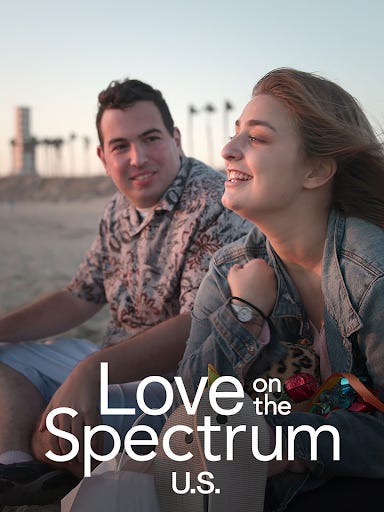
When you watch Love on the Spectrum, it doesn’t feel like a typical dating show. There are no dramatic eliminations, no manufactured conflict, and no sense that anyone is being pushed into a storyline they didn’t choose. That difference isn’t accidental. It starts with how the show is cast.
Unlike most reality television, Love on the Spectrum does not rely heavily on outside casting agencies or traditional pipelines built around finding big personalities or engineered drama. Instead, the casting process is handled more directly and intentionally, beginning with open applications. Individuals on the autism spectrum who are interested in dating can apply themselves or with the support of family members or caregivers. From there, the process becomes less about auditioning and more about conversation. Producers are not looking for performances. They are trying to understand who someone is, what they want, and whether they are comfortable sharing that experience on camera.
That distinction shapes everything. Most dating shows cast based on extremes—people who will clash, create tension, or drive a narrative forward. Love on the Spectrum operates differently. It casts for authenticity. Participants are selected to reflect a range of experiences across the spectrum, including different communication styles, levels of independence, and relationship histories. The goal is not to present a single version of autism, but to show its diversity in a way that feels grounded and real.
There is also a structural difference in how participants are supported once they are cast. Because the show is produced as a documentary, production is designed to adapt around the individual rather than forcing individuals into a rigid format. That includes pacing, communication, and how filming environments are structured. Dates are often planned with care and, in some cases, supported by relationship coaching to help participants feel prepared. The expectation is not that they will “perform,” but that they will participate in a way that feels natural to them.
The editing process reinforces this approach. Instead of shaping participants into predefined roles, the show builds individual storylines that follow each person’s experience as it unfolds. The result is a series that feels less constructed and more observational, even though it still exists within the constraints of television production.
At the same time, the casting process is not without complexity. Like any show, Love on the Spectrum involves selection. Not every applicant is featured, and the stories that are told are shaped by time, format, and production limitations. As the show has grown in popularity, additional questions have emerged around compensation and what participants receive in return for sharing their personal experiences on a widely viewed platform. These are questions that extend beyond this series and into the broader reality television landscape.
Still, the impact of the casting approach is difficult to ignore. By prioritizing authenticity over spectacle, the show has shifted how audiences understand autism—not through explanation, but through exposure. Viewers are not being told what autism looks like. They are being shown, through real interactions, relationships, and moments that are often familiar in ways people didn’t expect.
In that sense, casting is not just a production step. It is the foundation of the entire show. It determines not only who is seen, but how they are seen—and how the audience understands what they are watching.
The success of Love on the Spectrum suggests something broader than television. It points to what can happen when systems are built around people instead of asking people to adapt to the system. When that shift happens, the outcome doesn’t just change the experience for participants. It changes how the rest of us see them.


