
In One Region, Autistic Children Are Drowning at a Disturbing Rate
In Greater Cincinnati, a pattern of elopement-related drownings is raising urgent questions about response times, infrastructure, and accountability.

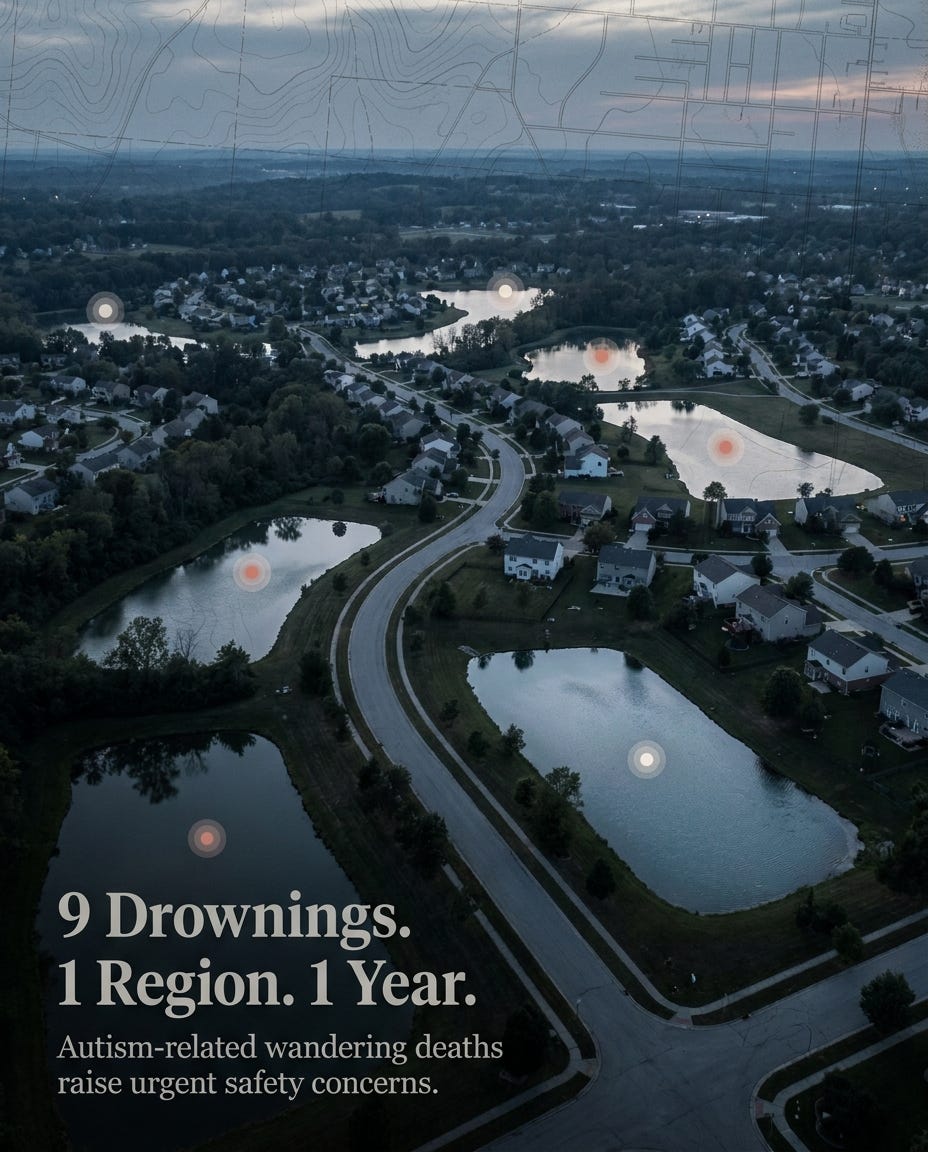
Drowning remains one of the leading, and most preventable, causes of death among children with autism, yet the scale of risk is still widely misunderstood outside of advocacy circles. Research consistently shows that nearly half of children with autism will wander, or “elope,” from a safe environment at some point, often without an awareness of danger. When they go missing, the outcome can turn fatal with alarming speed: studies and safety data have found that children with autism are up to 160 times more likely to die from drowning than their neurotypical peers, with the vast majority of fatal wandering incidents, often cited as more than 90%, ending in water. The combination of impulsive elopement, sensory attraction to water, and communication barriers creates a uniquely dangerous profile that has made drowning a persistent national safety crisis.
But in one area of the country, the numbers are no longer just alarming—they are concentrated.
In the Greater Cincinnati and Northern Kentucky region, what might once have been viewed as isolated tragedies has coalesced into something far more troubling:
