Making Room at the Table This Easter
How small changes in churches are helping children and young adults with special needs feel included

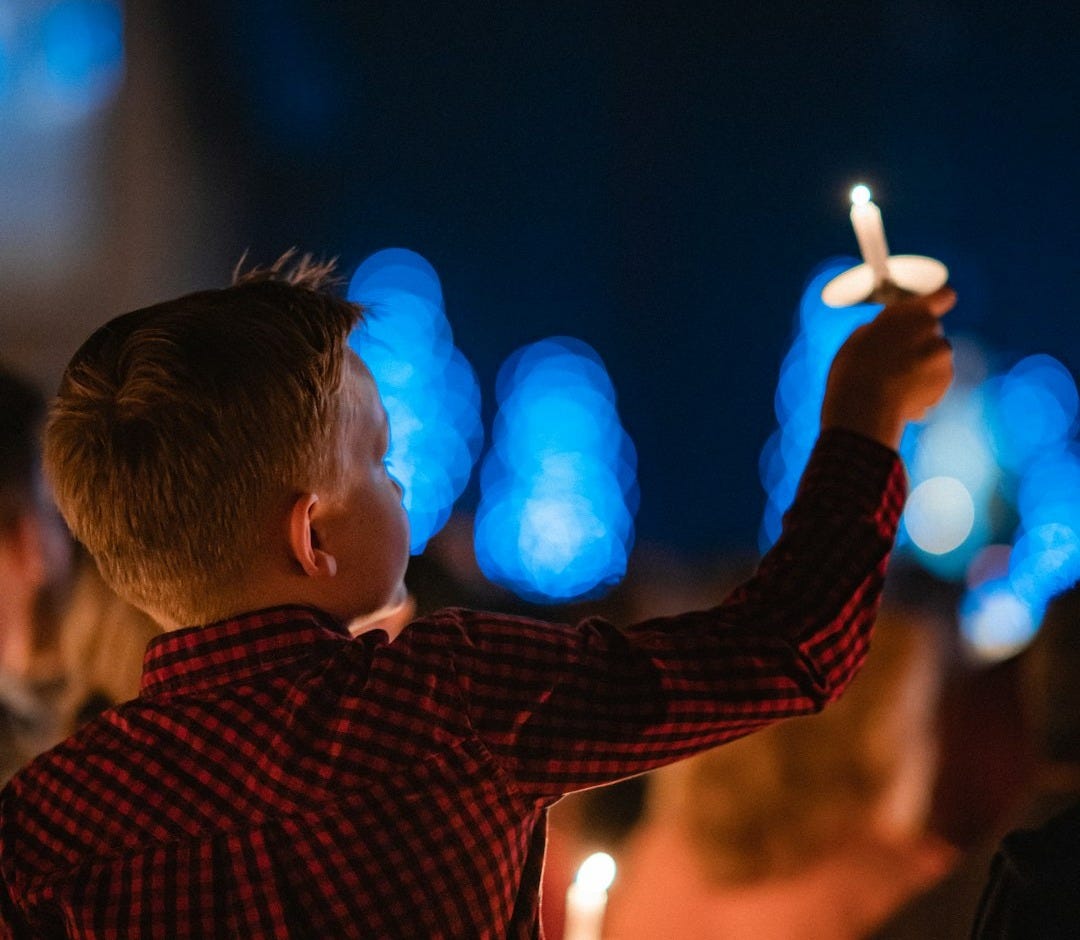
On Easter, churches fill with families, music, and tradition. For many, it’s a day of connection and celebration. And in more communities than ever, something else is happening too. Small but meaningful changes that are helping children with autism and other disabilities experience that sense of belonging in ways that weren’t always possible before.
In some churches, the lights are dimmed just a bit. The volume is lowered. A quiet room is available if things become overwhelming. Volunteers sit alongside children, not to “manage” them, but to support them. Visual guides help make the service more predictable. And for the first time, some families are able to stay, not because their child changed, but because the space did.
At Seacoast Church, just outside Charleston, a dedicated special needs ministry offers one-on-one “buddy” support so children can participate in services in ways that work for them. Families aren’t asked to step out—they’re invited in, with support built into the experience. What might otherwise be an overwhelming environment becomes something navigable, even welcoming.
In McLean Bible Church, their Access Ministry has created sensory-friendly environments, quiet spaces, and trained volunteers who understand communication differences and sensory needs. During major holidays like Easter, when services grow louder and more crowded, those accommodations aren’t extras, they’re essential. They make the difference between attending and belonging.
The same shift is happening in Jewish communities during Passover. At Temple Isaiah, inclusion has been built directly into religious life through structured support and adaptive programming for children with diverse needs. Families are offered modified participation options, visual supports, and flexibility during services and holiday gatherings. During Passover—when seders can be long, structured, and sensory-heavy—those adjustments allow more children to stay engaged in ways that feel manageable, rather than overwhelming.
In recent years, more communities have started to recognize this gap. Some now offer sensory-friendly services with lower volume, softer lighting, and shorter formats. Others have created quiet rooms—spaces where a child can regulate without leaving entirely. In some congregations, trained volunteers sit alongside children, helping them navigate transitions, follow along, or simply stay present.
In those spaces, participation looks different, but it’s still participation. And it matters. But those experiences are not universal.
In many places, families still find themselves improvising. Sitting near exits in case they need to leave quickly. Skipping certain parts of the service. Explaining behaviors to people who may not understand them. Or choosing not to attend at all, because the environment feels too unpredictable.
It’s not always about intention. Most communities want to be welcoming. But intention and infrastructure are not the same thing.
A louder choir, a longer sermon, a crowded room—these are small shifts for most people. But for a child with sensory sensitivities, they can be the difference between participation and overwhelm.
And when overwhelm happens, it’s often misunderstood. A child covering their ears may be seen as disruptive. A child moving through the aisle may be seen as restless. A child leaving may be seen as disengaged.
But none of those interpretations tell the full story. They’re responses. To sound. To unpredictability. To environments not built with them in mind.
That is why some communities are beginning to adapt—not just with programs, but with mindset. Recognizing that inclusion isn’t about making someone “fit” the space but adjusting the space so more people can belong in it.
That can look like something small—a visual schedule handed out before the service, or a volunteer who understands nonverbal communication. It can be as simple as a quiet acknowledgment that movement, noise, or breaks are not disruptions, but part of how someone participates.
Those shifts don’t change the meaning of the day. They expand who gets to experience it.
Again, not everywhere. But enough to show what’s possible.
Because the question isn’t whether inclusion can exist in these spaces. It’s whether it’s being built intentionally or left to chance. And for families navigating this today, that difference is immediately visible.
You can feel it when you walk in. You can feel whether you’re expected to adjust, or whether the space has already made room for you.
On days like Easter and Passover, when community is the message, that distinction matters more than ever.
Because belonging shouldn’t depend on preparation, explanation, or luck. It should be part of the structure itself.

