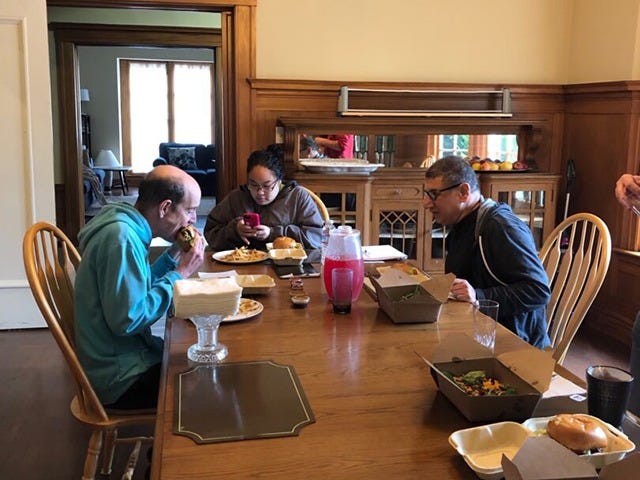
For thousands of families, group homes are presented as the next step. A structured environment designed to provide care, stability, and support for teens and adults with disabilities. Funded largely through public programs and operated by private providers, these homes sit at the intersection of healthcare, housing, and social services. But behind that promise is a system that operates largely out of public view, where oversight varies widely by state, staffing is strained, and accountability is often difficult to trace.
Across the United States, most group homes are not run directly by the government. Instead, states contract with private organizations—nonprofits and for-profit providers alike—to deliver services funded through Medicaid Home and Community-Based Services (HCBS) waivers and other public dollars. The model is designed to expand access and flexibility, allowing states to serve more individuals in community settings rather than institutions. In practice, it has created a decentralized network of providers operating under state supervision, but with significant variation in how that supervision is carried out.
Oversight exists, but it is neither uniform nor consistently visible to families. Licensing requirements, inspection schedules, and enforcement mechanisms differ from state to state. Some agencies conduct regular site visits and maintain publicly accessible records of violations. Others rely on periodic reviews, complaint-driven investigations, or internal reporting systems that are difficult for families to navigate. In many cases, inspections are scheduled in advance, raising questions about how well they capture day-to-day conditions.
What is clear across jurisdictions is that oversight tends to be reactive rather than preventative. Incidents, ranging from neglect to abuse, are often the catalyst for investigations rather than the result of continuous monitoring systems designed to detect problems early. Advocacy groups and watchdog reports have repeatedly pointed to gaps in reporting, delays in follow-up, and limited transparency in how findings are communicated to the public. Families, meanwhile, often describe a system where information is fragmented, and meaningful insight into a home’s track record can be difficult to obtain before placement.
Compounding these challenges is a workforce crisis that cuts across the entire disability services sector. Direct support professionals, who provide the daily care that sustains group home environments, are among the lowest-paid workers in healthcare. High turnover, chronic understaffing, and inconsistent training are widely documented. The result is a system where continuity of care, critical for individuals with complex needs, is difficult to maintain. Even in well-run homes, staffing instability can undermine safety, consistency, and the quality of support.
The structure of the system also raises fundamental questions about accountability. When services are publicly funded but privately delivered, responsibility is shared across multiple layers: the provider, the state agency, and the federal funding framework that underwrites the model. In cases where problems arise, determining where accountability ultimately rests can be complex. Providers are responsible for day-to-day operations, but states are responsible for oversight. Federal agencies set broad guidelines but do not manage individual homes. For families, this layered structure can feel opaque at best and impenetrable at worst.
None of this negates the reality that many group homes provide essential, high-quality care. For some individuals, they offer community integration, structured support, and opportunities for independence that would otherwise be out of reach. But the variability across the system—between states, providers, and even individual homes—remains one of its defining characteristics. The experience of one family may bear little resemblance to that of another, even within the same region.
That variability becomes especially significant when viewed through the lens of autonomy and vulnerability. Group homes are designed to support individuals who, in many cases, require assistance with daily living activities, including personal care. The level of dependence inherent in that care places a premium on trust, consistency, and safeguards. When those elements are strong, the model can work as intended. When they are not, the risks are amplified.
Families navigating placement decisions often find themselves balancing limited options against imperfect information. Waiting lists can be long, availability constrained, and geographic considerations restrictive. Once a placement is secured, ongoing visibility into care can depend heavily on communication with staff, frequency of visits, and the responsiveness of the provider. For individuals who have communication challenges, the ability to self-report concerns may be limited, further underscoring the importance of robust external oversight.
The broader policy conversation around disability services has increasingly focused on expanding access to community-based care, with group homes serving as a central component of that shift. Yet expansion without consistent oversight raises its own set of questions. As more individuals enter these systems, the need for standardized accountability measures, transparent reporting, and workforce investment becomes more urgent.
At its core, the issue is not whether group homes should exist, but how they function within a system that relies on both public funding and private delivery. Ensuring safety, dignity, and quality of life for residents requires more than compliance with baseline standards. It requires a level of visibility and consistency that allows families, advocates, and policymakers to understand not just what is promised, but what is actually being delivered.
For many families, the decision to place a loved one in a group home is made with the expectation that the system will provide what they cannot—consistent, professional, and safe care. Whether that expectation is met depends not only on the individual provider, but on the strength of the system that surrounds it.

