Practicing Life Before It Happens: How Virtual Reality Is Changing Independence
Virtual reality is giving neurodivergent youth a safe place to build real-world skills, but access to that future remains uneven.

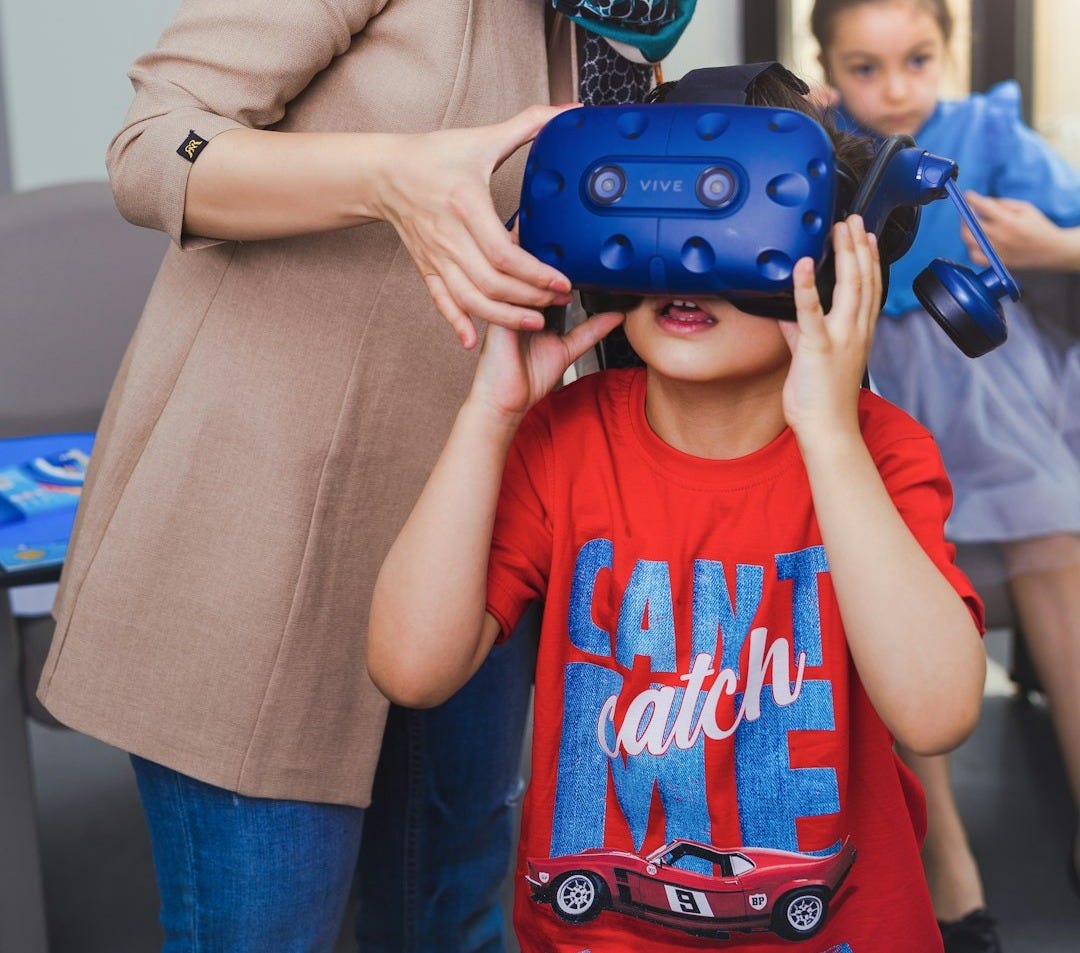
It’s a 15-year-old technology with a new frontier. And providers are hoping it is the key to cracking independence.
Virtual reality, once associated with gaming and entertainment, is now being used as a practical training tool for young people with autism and Down syndrome. The goal isn’t fantasy. It’s preparation. Inside these digital environments, users can rehearse real-world experiences such as navigating a grocery store, boarding public transportation, or interacting with a cashier repeatedly, without the pressure or unpredictability of the real world.
For many families, that repetition is everything.
Traditional life-skills training often relies on real-time exposure: going into the community and learning on the spot. But for neurodivergent individuals, those environments can be overwhelming. Sensory input, social expectations, and the fear of getting something “wrong” can turn a simple task into a high-stress experience. Virtual reality changes that equation. It creates a controlled space where mistakes aren’t consequences. They’re part of the learning process.
In a VR simulation, a missed social cue doesn’t lead to embarrassment. A wrong turn doesn’t create danger. Instead, the environment resets. The user tries again. And again. And again—until confidence starts to replace anxiety.
That’s where the real value begins.
Programs using VR for neurodivergent learners are increasingly focusing on practical, day-to-day skills tied directly to independence: how to order food, how to recognize safety signals, how to manage money, how to respond in unexpected situations. Some platforms even allow caregivers, therapists, and educators to customize scenarios based on the individual’s needs, adjusting difficulty levels or introducing new variables as skills improve.
And unlike traditional role-playing exercises, VR offers immersion. The environments feel real enough to trigger the kinds of decision-making and emotional responses that matter without the real-world stakes.
For young people with Down syndrome, who often benefit from visual learning and repetition, this kind of interactive training can be especially effective. For individuals with autism, who may struggle with unpredictability or social nuance, VR provides a structured way to break down complex interactions into manageable steps.
But the technology isn’t just about skill acquisition, it’s about access.
One of the biggest challenges families face is the gap between learning a skill and applying it in the real world. A child might understand a concept in therapy or at school, but transferring that knowledge into a busy, unpredictable environment is an entirely different challenge. VR helps bridge that gap by simulating those environments in a way that feels real enough to practice, but safe enough to fail.
Still, like much of the innovation in this space, access remains uneven.
VR systems can be expensive. Implementation requires training. And while some schools and therapy centers are beginning to adopt the technology, it’s far from universal. For many families, especially those already navigating complex care systems, these tools remain out of reach.
Which raises a familiar tension.
We are getting better at building tools that support independence, but not necessarily at making sure everyone can use them.
The promise of virtual reality in this space is clear. It offers a way to teach life skills with dignity, consistency, and personalization. It meets individuals where they are. And it recognizes something that families have long understood. Independence isn’t taught in a single moment. It’s built, step by step, through practice, repetition, and confidence.
The question now isn’t whether this technology works.
It’s whether we’ll make it accessible enough to matter.

