Special Needs Children Deserve More Than Clipart
For students who depend on visual learning the most, our educational tools remain stuck in the era of PowerPoint icons.
Walk into almost any special education classroom or therapy room and you’ll see the same thing.
Stick figures. Generic icons. Simple feature characters.
Flat clipart faces recycled over and over.
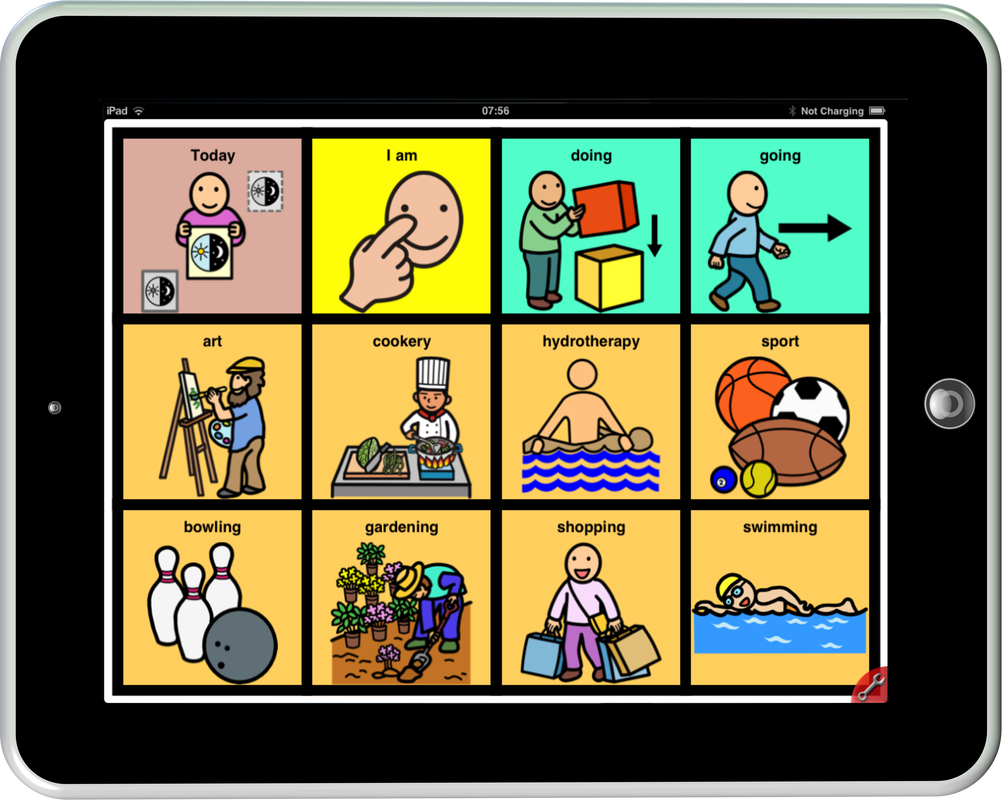
These images are everywhere—on AAC devices, social stories, classroom schedules, behavior charts, worksheets, and communication boards.
For the population that relies on visual learning the most, we’ve built an entire educational ecosystem out of the most basic visual tools possible.
And that should make us uncomfortable.
A System Built on Visual Learning
In the United States alone, about 7.5 million students—roughly 15% of all public school students—receive special education services under the Individuals with Disabilities Education Act (IDEA).
Many of those students rely heavily on visual supports to understand their world.
Visual schedules, communication boards, and picture-based systems are widely used because they help students understand routines, communicate needs, and process information more clearly.
For children with autism in particular, these tools are not optional—they are foundational.
Approximately 30% of individuals with autism are minimally verbal or nonverbal, meaning visual communication systems like AAC devices can be essential for daily communication.
Research shows over 40% of children with autism have difficulty using speech to meet their communication needs, making alternative visual systems critical.
When words fail, pictures become language. And yet the pictures we give these children are often the lowest effort visuals imaginable.
The Clipart Problem
Clipart was never designed to teach complex concepts to neurodivergent learners. It was designed to fill space on PowerPoint slides. But somehow it became the visual backbone of special education.
Children who rely on visuals to understand the world are often shown:
simplified stick figures
repetitive generic icons
emotionless faces
culturally neutral placeholders
These images are meant to represent real experiences: going to school, taking a shower, visiting the doctor, making friends, and even managing big emotions.
But the visuals themselves often fail to capture the complexity, emotion, and realism of those moments.
For many children—especially visual thinkers—this matters.
Visual thinking itself is a powerful cognitive style. Research suggests that around 60–65% of people process information visually to some degree, forming mental images to understand concepts.
Now imagine being a child who relies on visuals even more heavily—and the entire system teaching you uses the equivalent of 1998 PowerPoint icons.
Representation Matters in Learning
In mainstream children’s publishing, animation, and education, there has been an explosion of investment in visual storytelling.
Books are illustrated with stunning artwork. Educational apps use cinematic animation. Children’s television builds entire worlds through character design.
But in the world of special education—where visuals may matter most—we have largely stopped at clipart. The message this sends is subtle but powerful:
These learners deserve functionality, not beauty.
Utility, not imagination.
But learning isn’t just about instruction. It’s about engagement, curiosity, and emotional connection.
When children see characters that look like them…
When they recognize environments that feel familiar…
When illustrations show real emotions and experiences…
The learning experience changes. The lesson becomes a story. And stories stick.
The Gap No One Is Filling
There are thousands of companies producing: AAC apps, visual schedules, social stories, and special education curriculum - but surprisingly few are investing in original artwork designed specifically for neurodivergent learners.
Most rely on massive clipart libraries that are reused across thousands of materials. Meanwhile, the same children who depend on visuals the most are often visual thinkers with deep imaginations.
The opportunity here is enormous. Not just for better products—but for better dignity.
Children with special needs deserve:
visuals that reflect their real lives
characters that represent their experiences
artwork that treats their learning with creativity and care
They deserve materials that feel designed for them, not adapted from a generic icon pack.
Visuals Are Language
For many children, a picture isn’t decoration.
It’s communication.
It’s instruction.
It’s understanding.
When a child learns to use a visual schedule, they are learning how to navigate their day. When a child taps an image on an AAC device, they are speaking. When a child reads a social story, they are learning how to move through a world that often feels confusing.
Visuals are not extras in special education. They are the language itself.
Which raises an important question - if visuals are the language of so many special needs learners… why are we still teaching them with clipart?
Maybe it’s time we start building something better.