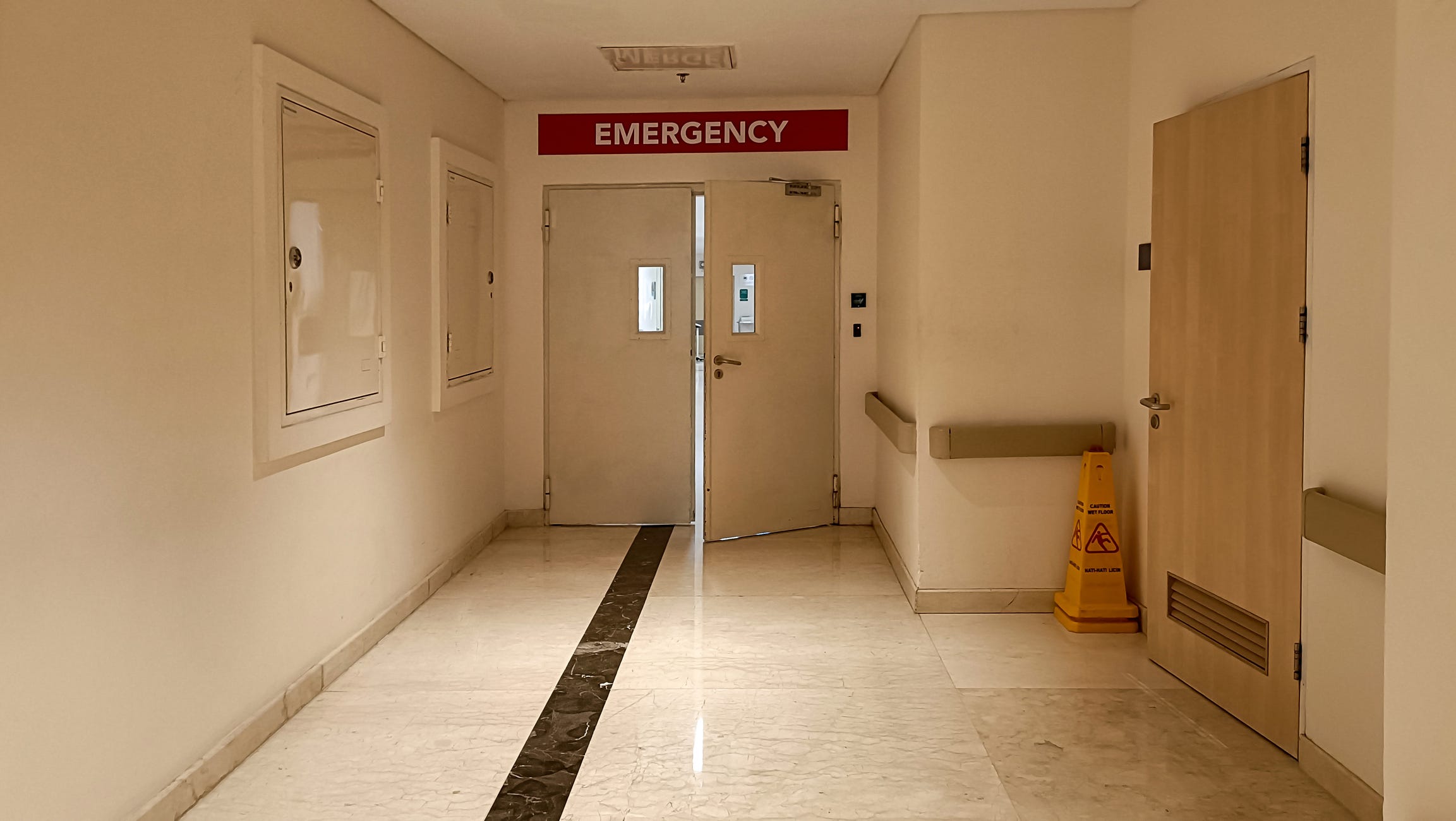
For decades, America told itself a story about progress.
Large state institutions closed. Disability rights laws expanded. Children with disabilities entered public schools in greater numbers. The language of “integration,” “inclusion,” and “community living” replaced the cold architecture of segregation that once defined life for many people with intellectual and developmental disabilities.
But beneath the surface of modern disability policy, a quieter shift may now be underway.
Across the country, a growing number of families, providers and policymakers are revisiting forms of residential and congregate care once thought to belong to America’s past. The names have changed. The buildings are newer. The marketing language is softer. But advocates and historians warn that some of today’s “specialized campuses,” “autism villages,” “stabilization centers” and “neurobehavioral facilities” are raising difficult questions about whether institutionalization is quietly being rebranded rather than eliminated.
The renewed debate is emerging at a time when America’s disability support systems are under enormous strain.
According to the Centers for Disease Control and Prevention, approximately 1 in 31 children in the United States is now identified with autism spectrum disorder. At the same time, the nation faces severe shortages of direct support professionals, long waiting lists for Medicaid Home and Community-Based Services waivers and a growing population of autistic adults aging out of school systems with limited long-term housing and employment options.
The result has left many families caught between two realities: a system that promises community integration and a daily life in which meaningful support can be nearly impossible to secure.
Historically, institutions were presented as humane solutions.
During the late 19th and early 20th centuries, large state-run facilities for people labeled “feebleminded,” “insane” or “defective” expanded rapidly across the United States. Many were originally promoted as therapeutic communities designed to provide education, structure and care. Over time, however, overcrowding, abuse, neglect and forced segregation became defining features of the institutional era.
By the mid-1960s, state institutions housed hundreds of thousands of Americans with intellectual and developmental disabilities. Some facilities became infamous for violence, medical neglect and inhumane living conditions. Public outrage intensified after televised investigations and lawsuits exposed widespread abuse inside institutions such as the Willowbrook State School on Staten Island, where children with developmental disabilities lived in deplorable conditions.
The push toward deinstitutionalization accelerated in the 1970s and 1980s through a combination of civil rights litigation, Medicaid reforms and changing public attitudes toward disability. Landmark decisions, including the Supreme Court’s 1999 Olmstead ruling, established that people with disabilities have the right to receive services in the most integrated setting appropriate to their needs.
But while institutions closed, the community infrastructure designed to replace them was never fully built.
Today, more than 700,000 Americans remain on waiting lists for Medicaid Home and Community-Based Services, according to KFF, formerly the Kaiser Family Foundation. In some states, families wait years for residential placements, respite care or in-home support services. Direct support professionals, the workforce responsible for helping disabled individuals with daily living, are leaving the field in large numbers due to low pay and burnout.
For families caring for individuals with severe behavioral, medical or intellectual support needs, the gaps can become overwhelming.
In online caregiver forums and state legislative hearings, some parents openly describe living in crisis. Others speak about emergency room visits, aggressive behaviors, school refusals or fears about what will happen when aging caregivers die. Increasingly, some families are advocating for highly structured residential settings they believe can provide safety and stability unavailable elsewhere.
That demand has fueled the expansion of newer residential models.
Across the country, organizations have developed autism-specific campuses, farmstead communities and residential programs marketed around security, sensory regulation and lifelong care. Some are privately funded. Others operate through Medicaid dollars or nonprofit systems. Promotional materials often emphasize independence, dignity and community while also offering contained environments designed specifically for autistic or intellectually disabled residents.
Supporters argue these settings are fundamentally different from the institutions of the past. Many are smaller in scale, incorporate therapeutic services and attempt to provide recreational and vocational opportunities within residential communities.
Critics, however, warn that the core question is not whether facilities are modernized but whether disabled individuals are still being separated from broader public life.
Disability rights advocates have increasingly raised concerns that segregation can return under more socially acceptable language. Terms such as “specialized village” or “behavioral stabilization campus,” they argue, may obscure systems that still isolate disabled people from neighborhoods, workplaces and civic participation.
The debate has also exposed growing tensions within the autism community itself.
Much of the public conversation around autism in recent years has centered on neurodiversity, self-advocacy and inclusion. But some families of profoundly disabled or high-support-needs individuals say those conversations often fail to reflect the realities they face. Parents navigating severe self-injury, elopement, aggression or 24-hour care needs sometimes describe feeling politically and socially invisible within broader autism discourse.
At the same time, self-advocates warn against allowing caregiver exhaustion or system failures to justify a return to models that historically stripped disabled individuals of autonomy and civil rights.
Both realities now exist simultaneously.
America’s disability system is confronting a difficult truth: closing institutions did not eliminate the need for intensive support. It simply shifted responsibility onto fragmented community systems that remain unevenly funded and deeply inconsistent across states.
The question facing policymakers is no longer simply whether institutions were harmful. History has already answered that. The harder question may be what happens when community living becomes more of a legal principle than a functional reality.
As autism prevalence rises and service systems strain under growing demand, the nation may soon be forced to confront whether it is truly building inclusive infrastructure — or quietly reconstructing institutional models under new names.
The answer could shape the future of disability policy for generations.


I don’t mind folks having choices led with informed consent and autonomy. I don’t trust the current administration to do this well, considering how they’ve handled conversations around autism, mental health, and disability.