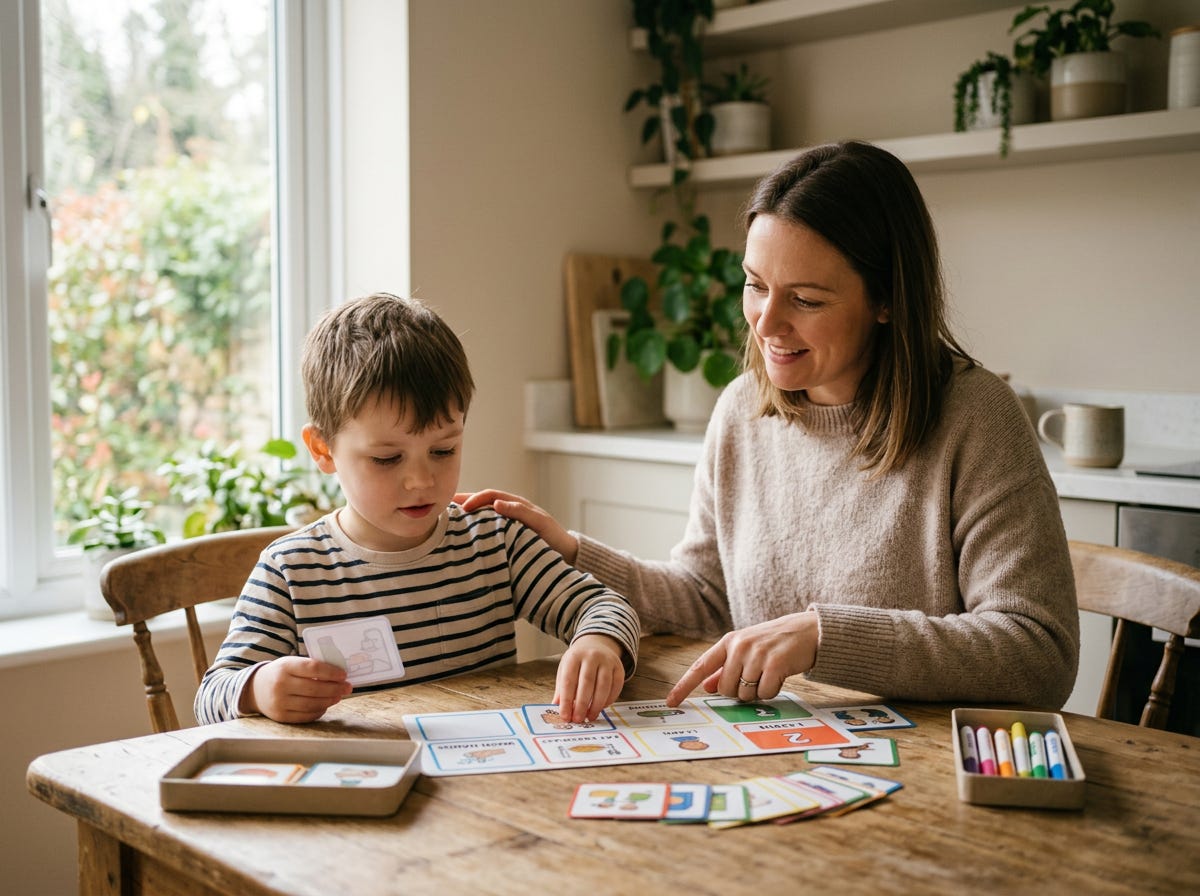
The Quiet Shift: Why More Autism Families Are Turning to Homeschooling
And what it reveals about a system many say is no longer working
Across the United States, a quiet but significant shift is underway in how families, particularly those raising children with autism, are approaching education. Homeschooling, once considered a fringe alternative, has rapidly expanded into a mainstream option. As of 2024, approximately 3.7 million children in the U.S. are being homeschooled, representing nearly 6.7% of all school-age children, a sharp increase from roughly 2.5 million in 2019. This growth has been fueled in part by the pandemic, but the trend has not reversed. Instead, it has evolved—especially among families navigating special needs.
Within that broader movement, children with disabilities—and particularly autism—are disproportionately represented. Research suggests that about 1 in 10 children with autism in the United States are homeschooled, and as many as 25% to 38% of homeschooling families include a child with special needs. More telling, however, is not just how many families are homeschooling, but why. Studies show that children with disabilities make up over one-third of “second choice” homeschoolers, meaning families who turned to homeschooling after attempting traditional schooling first. In other words, for many, homeschooling is not a proactive lifestyle decision. It is a response.
For some families, that response is rooted in positive intent. Homeschooling offers something traditional systems often struggle to deliver: flexibility. Parents can build individualized schedules, incorporate therapies into daily routines, and create sensory-friendly environments tailored to their child’s needs. Research indicates that parents of homeschooled autistic children frequently report lower stress levels, fewer behavioral challenges, and improved emotional well-being in their children once removed from traditional school settings. In these cases, homeschooling is not just an alternative, it is seen as a better fit.
But for a significant number of families, the decision is far less voluntary.
One of the most consistent drivers behind the shift is dissatisfaction with how schools handle special education. Surveys have found that roughly 30% of parents of children with autism cite inadequate special education services as a primary reason for homeschooling. This includes inconsistent implementation of IEPs, lack of trained staff, and breakdowns in communication between schools and families. Even more broadly, federal data shows that concerns about the school environment. Safety and bullying are cited by the majority of homeschooling parents overall.
Bullying, in particular, remains a critical and often under-addressed factor. Research reviewing homeschooling among autistic children consistently identifies bullying, poor peer relationships, and lack of school flexibility as key reasons families leave traditional education. For children with autism, who may already struggle with communication, social cues, or self-advocacy—the impact of bullying is often magnified. It is not simply a social issue; it can trigger regression, anxiety, and a breakdown in daily functioning.
This is where the narrative around homeschooling becomes more complicated.
What looks externally like a “choice” often reflects something closer to a forced pivot. When systems fail to provide adequate support, families adapt. When schools cannot ensure safety or meaningful inclusion, parents remove their children. And when repeated efforts to advocate within the system fall short, homeschooling becomes less of an option and more of an exit strategy.
The data supports this distinction. Families of children with disabilities are significantly more likely to homeschool after experiencing traditional school systems, rather than choosing it from the outset. This suggests a pattern not of preference, but of response—one driven by unmet needs, accumulated frustration, and a desire to regain control over a child’s environment.
At the same time, the rise in homeschooling raises broader questions about equity and sustainability. Not all families have the resources, time, or flexibility to homeschool effectively. For many, it requires one parent stepping out of the workforce, restructuring daily life, and taking on the dual role of caregiver and educator. While some children thrive in this environment, others lose access to services, peer interaction, and specialized support that schools—at their best—are meant to provide.
Which leads to the larger implication of this trend. Homeschooling is not just growing; it is becoming a signal.
A signal that more families are willing to step outside traditional systems.
A signal that those systems are not consistently meeting the needs of neurodiverse students.
And perhaps most importantly, a signal that the gap between what is promised and what is delivered in special education is widening.
For families raising children with autism, the decision to homeschool is rarely simple. It exists at the intersection of protection, necessity, and possibility. For some, it represents empowerment. For others, it reflects a system that has already failed them.
And as the number of homeschooling families continues to rise, the question becomes harder to ignore.
Are parents choosing homeschooling or are they being pushed there?