What Memantine—an Alzheimer’s Drug—Could Mean for the Future of Autism Studies
A small clinical trial found the strongest response to memantine in autistic youth with elevated glutamate levels in a specific brain region.

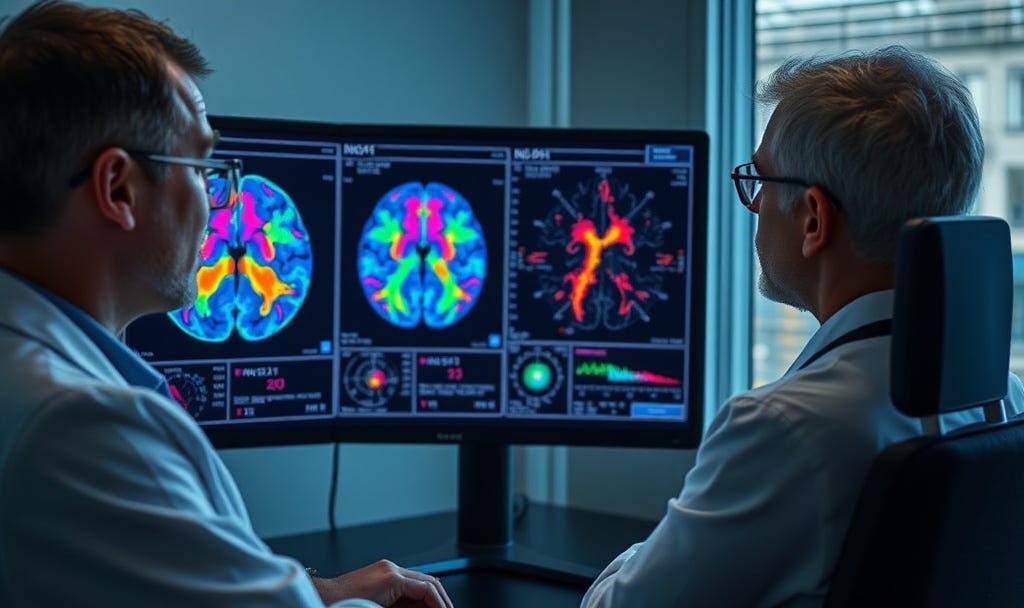
For years, autism research has largely focused on behavior: social communication differences, repetitive behaviors, sensory sensitivities and developmental milestones. But a growing body of neuroscience research is pushing scientists deeper into the biology of the autistic brain itself — particularly the role of glutamate, one of the brain’s most important chemical messengers. Now, a new study involving the Alzheimer’s drug memantine is renewing interest in whether targeting glutamate pathways could one day help certain subgroups of autistic people, potentially opening the door to more personalized treatment approaches in autism research.
Glutamate is the brain’s primary excitatory neurotransmitter, meaning it helps nerve cells send signals to one another. It plays a major role in learning, memory, sensory processing and neural communication. Researchers have long theorized that some autistic individuals may experience an imbalance between excitatory signals, driven largely by glutamate, and inhibitory signals, often associated with another neurotransmitter called GABA. Some scientists believe that imbalance could help explain why certain autistic people experience sensory overload, heightened anxiety, emotional dysregulation or difficulties filtering information from their environments.
Interest in glutamate is not entirely new. Researchers have spent years studying whether elevated glutamate activity could contribute to autism-related traits. But the conversation has accelerated in recent years as brain imaging technologies and biomarker research have become more sophisticated. Rather than viewing autism as a single condition with a universal cause or treatment pathway, many scientists are increasingly approaching autism as a broad umbrella made up of multiple biological subtypes.
That shift is part of what makes a recent memantine study particularly notable.
Memantine is currently approved by the U.S. Food and Drug Administration for moderate to severe Alzheimer’s disease. The medication works by regulating activity at NMDA receptors, which are involved in glutamate signaling in the brain. Researchers have theorized that if glutamate dysregulation contributes to challenges in some autistic individuals, medications that affect glutamate pathways could potentially improve certain symptoms or functioning in specific subgroups.
In October 2025, researchers published a randomized clinical trial in JAMA Network Open examining memantine in autistic youth between the ages of 8 and 17 who did not have intellectual disability. The study was relatively small, involving just over 40 participants, but the findings drew attention because of the biological pattern researchers observed.
According to the study, approximately 56% of participants receiving memantine met response criteria compared to roughly 21% in the placebo group. Researchers reported improvements tied to social functioning measures in some participants. But perhaps the most significant finding was that the strongest responses appeared in autistic youth who showed elevated glutamate levels in a specific brain region known as the pregenual anterior cingulate cortex.
That detail may ultimately matter more than the medication itself.
Rather than suggesting memantine is broadly effective for autism, the study points toward a future where researchers identify neurological or biochemical subgroups within autism and match treatments to those profiles. In other words, scientists may eventually move away from the idea that a single intervention could work for all autistic individuals.
The concept mirrors broader shifts already happening in other areas of medicine. Cancer treatments, for example, are increasingly tailored to specific genetic or molecular characteristics. Psychiatry and neurology researchers are now exploring whether similar precision medicine approaches could eventually apply to neurodevelopmental conditions as well.
Some researchers caution that families should not interpret the memantine findings as evidence of a breakthrough treatment. The study was small, and larger trials are needed to determine whether the results can be replicated consistently across broader populations. Previous studies involving memantine and autism have produced mixed findings, including trials that did not show clear superiority over placebo in later-stage analysis.
Still, experts say the study reflects a larger transformation happening inside autism research itself. Increasingly, scientists are trying to understand why autistic individuals can present so differently from one another biologically, cognitively and behaviorally.
That question has become especially important as diagnoses continue to rise and clinicians encounter enormous variability across the spectrum. Some autistic individuals are minimally speaking and require lifelong support, while others live independently but struggle with anxiety, sensory issues or social communication. Researchers are increasingly questioning whether those vastly different presentations may involve overlapping but distinct neurological pathways.
The glutamate conversation also intersects with growing interest in autism and emotional regulation. Some researchers believe glutamate dysregulation may play a role in sensory hypersensitivity, heightened stress responses and difficulties transitioning between environments or activities. While no single neurotransmitter can fully explain autism, scientists are examining how broader neural signaling systems may contribute to the condition’s complexity.
The memantine study arrives amid a wider trend toward identifying autism “biotypes” or neurological subgroups. Similar efforts are underway in ADHD research, where scientists recently identified distinct biological patterns tied to emotional dysregulation and executive functioning differences. Researchers hope that understanding those biological differences could eventually improve treatment selection and outcomes.
For families, however, the science remains early and often difficult to interpret. Autism advocates have repeatedly warned against oversimplified narratives suggesting a “cure” or universal medical solution is imminent. Many autistic adults also emphasize that autism is not simply a disorder to eliminate, but a neurodevelopmental difference that shapes identity, communication and perception.
Even so, researchers say understanding the brain’s underlying biology may still help improve quality of life for autistic individuals who experience severe anxiety, sensory distress, emotional dysregulation or co-occurring mental health challenges.
For now, the memantine findings are best understood not as a definitive answer, but as part of a larger scientific shift. Rather than searching for one explanation for autism, researchers are increasingly investigating whether multiple neurological pathways — including glutamate signaling — may help explain why autistic experiences vary so dramatically from one person to another.

