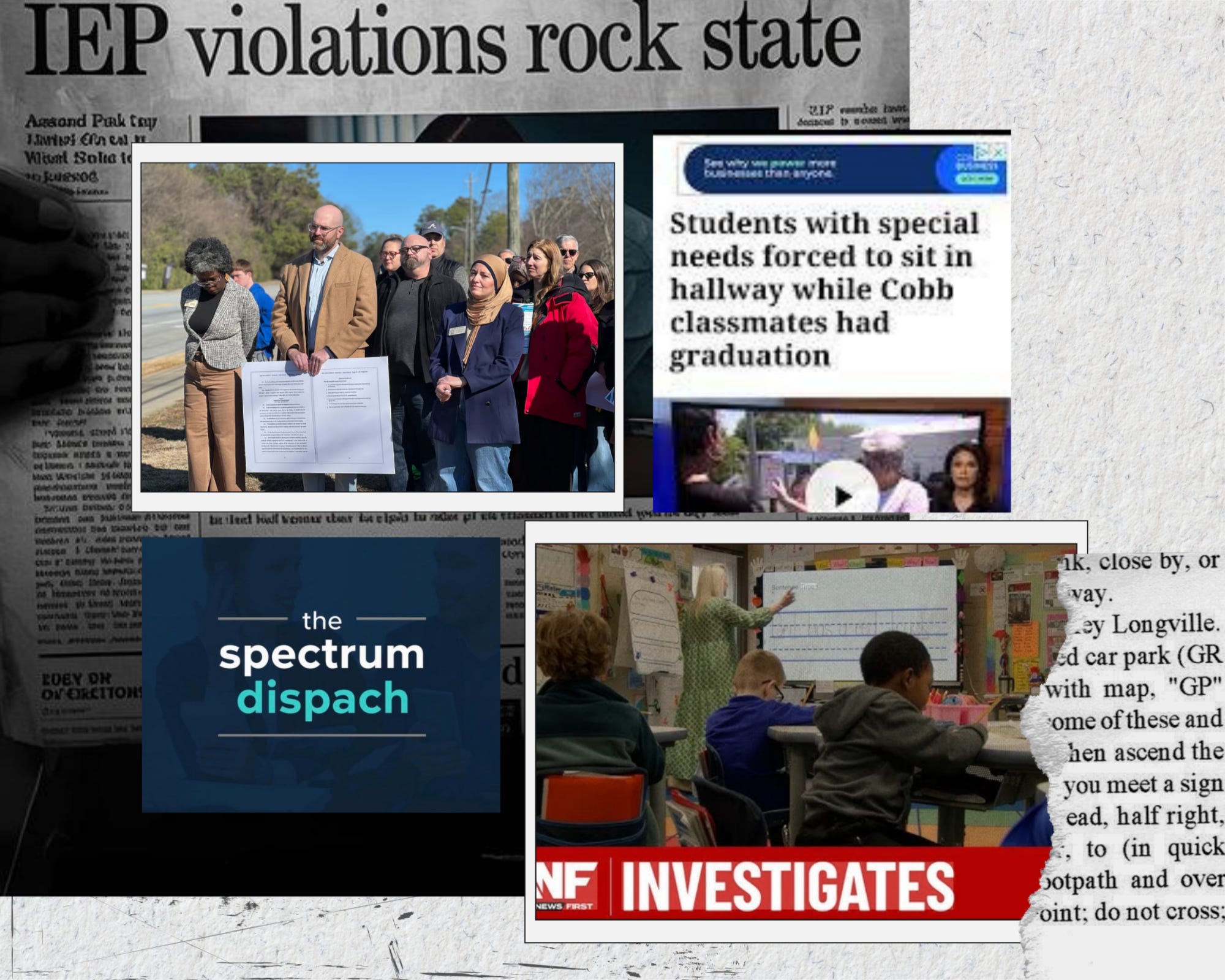
When Services Fail: Georgia’s Surge in Special Education Lawsuits Signals a National Breaking Point
A sharp rise in due process filings isn’t just a state-level anomaly. It may be a sign of a widening gap between what schools are legally required to provide and what they can realistically deliver.
In Georgia, a quiet escalation is underway. One that is increasingly playing out not in classrooms, but in courtrooms.
Due process hearing requests tied to special education have climbed sharply in recent years, with state-level reporting indicating a significant increase over a five-year period and dozens of filings already recorded in the opening months of 2026. While exact figures can vary depending on how cases are tracked and reported, the direction of the trend is clear: more families are turning to legal action to secure services they say their children are entitled to but are not receiving.
This is not a story about one state. It is a story about pressure building across a system that is struggling to keep up.
At the center of these disputes are Individualized Education Programs, or IEPs, legally binding documents that outline the supports a child must receive. These can include speech therapy, occupational therapy (OT), physical therapy (PT), and behavioral services such as Applied Behavior Analysis (ABA).
Under the Individuals with Disabilities Education Act, these services are not optional. Schools are required to provide a “free appropriate public education” tailored to each student’s needs.
But across Georgia—and increasingly across the country—schools are facing a reality that is harder to legislate: there are not enough providers to meet demand. Districts nationwide report persistent shortages of qualified professionals in critical service areas. Speech-language pathologists, occupational therapists, behavioral specialists, and paraprofessionals are in high demand, and short supply. In some regions, vacancies remain unfilled for months. In others, services are delivered inconsistently or delayed altogether.
In some cases, the consequences of failing to follow an IEP extend beyond missed services. In Georgia, a lawsuit has been filed by parents alleging that their 11-year-old son died following a seizure at school after staff failed to adhere to both his Individualized Education Program and a documented emergency medical plan. According to the complaint, the child was given access to an iPad despite it being identified as a seizure trigger and was not properly monitored in accordance with his care plan. The district has not publicly responded to the full scope of the allegations, and the case remains part of ongoing legal proceedings. While the circumstances are specific and still being examined, the case underscores a broader reality: when legally mandated supports and safeguards are not implemented as written, the consequences can be severe—and, in rare instances, irreversible.
For families, the distinction between “scheduled” and “delivered” services and plans is not semantic. It is consequential.
When details outlined in an IEP are missed or never implemented, the impact compounds over time. Skills regress. Progress stalls. And for many parents, the question becomes not whether to act, but how.
Increasingly, the answer is legal recourse.
In Georgia, some cases have resulted in financial settlements after findings that districts failed to meet their obligations. While individual outcomes vary and are often resolved confidentially, these cases point to a broader shift: families are becoming more aware of their rights, and more willing to enforce them.
That shift is happening alongside growing uncertainty at the federal level.
The Individuals with Disabilities Education Act establishes the legal framework for special education, but enforcement and implementation are largely left to states and local districts. Ongoing debates around funding, oversight, and accountability have created inconsistencies in how services are delivered, and how failures are addressed.
In practice, this means access to legally mandated support can depend heavily on geography. Georgia’s rise in filings may be one of the clearest indicators yet of what happens when systemic strain reaches a tipping point: families escalate.
But the underlying conditions—staffing shortages, rising demand, administrative burden, and uneven enforcement—are not unique to Georgia. They are present in districts across the United States.
Which raises a larger question: If the system cannot meet its obligations at scale, what happens next?
For now, the answer is unfolding case by case, filing by filing. But the trajectory suggests that what is happening in Georgia is not an outlier. It is a signal.
If you’re navigating special education services and want to share your experience, reply or comment. Stories like these are shaping what comes next.